
Can your home propane tank freeze? PepUp Answers
Our local climate in the Delmarva region is temperate, yet unpredictable, especially during the winter months. It’s crucial to ensure that your home is prepared for the challenges of the season, but there’s one question we hear a lot that we’d like to reassure our customers shouldn’t be an issue: Can a home propane tank freeze?
Here’s the lowdown on how propane behaves in colder weather, as well as some invaluable tips for maintaining your system and knowing when the cold has caused a problem. While propane tanks don’t usually freeze, cold weather can affect other parts of your system, so it’s good to know what to look for and what to do about it.
Understanding Propane and Its Properties
Let’s start with a brief overview of what propane is and how it works. Propane is a liquefied petroleum gas (LPG) commonly used for heating, cooking, and other applications in homes, especially in areas not served by natural gas pipelines. It is stored in a liquid state in tanks under pressure.
Propane’s boiling point is -44°F, which means that in our area, your propane will remain in its gaseous state when it’s released from the tank. As propane converts from liquid to gas, a vaporization process takes place, which is critical for the proper functioning of home heating systems.
Can Your Propane Tank Freeze?
Technically, your propane tank won’t freeze as a result of winter weather we normally see in the Mid-Atlantic states. However, under certain conditions, the liquid propane inside can remain in a liquid state, which can interfere with its ability to heat your home and power your appliances effectively.
In extreme cold, the pressure in the propane tank may drop. This causes difficulties with propane vaporization, potentially leading to heating issues.
Several factors can affect the pressure inside the tank:
- Ambient Temperature: Colder temperatures cool the tank and the propane inside, reducing pressure.
- Tank Level: A nearly empty tank is more susceptible to pressure loss.
- Usage Rate: High usage can lower pressure quickly in cold temperatures.
How to Prevent Winter Propane Problems
Taking some precautions can help ensure your propane system runs smoothly throughout winter.
- Regular Maintenance: Schedule regular inspections and maintenance of your propane system to ensure all components are functioning optimally.
- Tank Location: Ensure your propane tank is situated in an ideal location to minimize exposure to harsh weather. Consider using tank covers or barriers if necessary.
- Keep Your Tank Full: Aim to keep your propane tank as full as possible. A fuller tank retains pressure better and is less prone to temperature-related problems.
- Insulate Exposed Pipes: Insulate any exposed propane lines to reduce the chance of liquid propane failing to vaporize.
- Use a Regulator: A quality regulator can help maintain adequate pressure levels, even in fluctuating temperatures.
- Consider a Tank Heater: When temperatures regularly drop below freezing, it can be helpful to maintain propane tank temperatures so pressure drops aren’t an issue. Here’s more information about propane tank heaters.
What to Do if You Encounter Problems During a Cold Snap
Despite your best efforts, occasionally, a cold snap may cause problems. Here’s what you should do:
- Don’t Panic: If your heating system and/or appliances stop working, check your thermostat and verify you have sufficient propane first.
- Call a Professional: If you can’t resolve the issue, it’s vital to contact us right away for a thorough inspection.
- Use Safe Practices: In case of any strong gas odor, evacuate your home immediately and contact us.
The Importance of Working with a Propane Professional
Having a reliable propane supplier and service team on your side is invaluable, especially in our region where weather can change rapidly. Professionals not only provide routine maintenance but are also available for emergency services, helping you navigate through the worst winter weather safely.
Expert Tip: Regularly scheduled deliveries can help ensure you never run out of propane and maintain the right pressure levels, keeping your home warm and cozy. Sign up for The Promise Plan with Automatic Delivery, and never run out of propane again.
Winter Weather FAQs: Propane Tanks in Cold Conditions
Propane itself does not freeze in typical winter weather on Delmarva. Propane has a freezing point far below temperatures we experience locally. However, cold weather can reduce tank pressure, which may affect how propane flows to your appliances.
Propane has a freezing point of around -306°F, and a vaporization point of -44°F. Temperatures in our region can sometimes cause tanks filled to less than 30% to lose pressure, causing appliances to not work properly. Some homeowners may mistake this for a “frozen” tank.
Frost on a propane tank is usually a sign of environmental frost settling or rapid vaporization, not freezing. When propane changes from liquid to gas, it absorbs heat, which can cause condensation or frost to form on the outside of the tank, especially during cold weather or periods of heavy usage. It’s a good idea to keep the area around your propane tank free of snow and ice, especially when you’re expecting a delivery.
In most cases, frost on a propane tank is not dangerous and can be a normal occurrence during cold weather. However, excessive frosting, weak appliance performance, or appliances shutting off may indicate low pressure issues and should be evaluated by a professional. Give us a call at 800-638-7802 if you’re having trouble with your appliances due to low temperatures and resulting low tank pressure in cold weather.
No. Propane tanks are designed to safely withstand cold temperatures, and are only filled to 80% capacity as a safety measure to allow for outdoor temperature fluctuations (primarily heat, which leads to liquid propane expansion). Tanks are also equipped with safety pressure release valves and are built to handle pressure changes. Cold weather will not cause a propane tank to over-pressurize. If anything, cold temperatures cause drops in pressure inside the tank.
Propane lines themselves do not freeze, but moisture in the system or pressure drops can sometimes cause flow issues in cold weather. Insulating exposed lines and keeping tanks adequately filled can help prevent problems.
It’s common to see frost on a tank during high demand, such as when heating systems or multiple appliances are running. This typically indicates increased vaporization rather than a malfunction. Your tank and the propane inside aren’t frozen, but you may be seeing frost as a result of normal usage in cold temperatures.
First, check your thermostat and confirm that you have propane in the tank. If your propane is at or near 30%, request a propane delivery. If you have plenty of propane and appliances still aren’t operating correctly, contact an HVAC professional to inspect the system. If you smell gas, leave the area immediately and call for emergency assistance.
To minimize winter issues:
- Keep your tank above 30% whenever possible
- Schedule regular system inspections
- Insulate exposed piping
- Consider automatic delivery
- Avoid waiting until severe cold sets in to refill
You should contact a professional if you notice persistent appliance issues, repeated system shutdowns, unusual frosting patterns, or any gas odor. Professional support ensures safe operation and peace of mind during unpredictable winter weather.
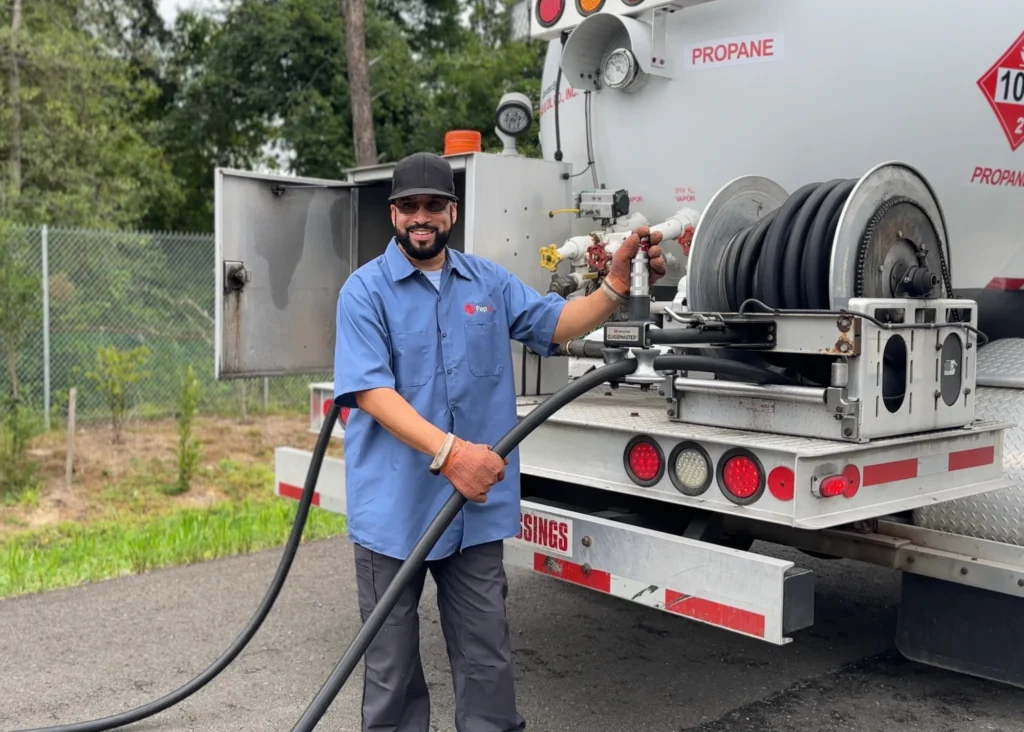
Meet Contributor and PepUp Delivery Driver, Randy Pendleton
PepUp customers in the Glen Burnie District have told us how happy they are to see their favorite driver of nearly a decade continue delivering their home propane with PepUp. Randy knows his customers by name, and he’s always willing to answer questions if you have them. He’s a propane superstar!