10 Factors That Affect Propane Price Per Gallon in the Mid-Atlantic
PepUp delivers propane and fuel across Delaware, Maryland, and Virginia. The number one question customers ask our drivers and energy specialists is, “why does propane cost per gallon change so much?”
In response, this guide breaks down the ten factors that affect the price of propane, and when is the best time to cap prices with programs like The Promise Plan and Pre-Buy.
What you need to know first is that your propane cost per gallon starts far from Delmarva. It begins at the national wholesale market and is impacted at every step until it gets to your tank. Understanding that supply chain helps you plan your propane purchasing and pricing options without budget surprises.
How Propane Pricing Works
Propane is a hydrocarbon gas liquid. Producers extract it from natural gas processing and crude oil refining, linking its price to two of the largest energy markets in the world.
Mont Belvieu, Texas is the main storage and trading hub for propane in North America. The U.S. Energy Information Administration (EIA) forecasts propane price per gallon in its Short-Term Energy Outlook, which is updated monthly, based on the spot price for propane in Mont Belvieu.
Your retail cost per gallon begins with that wholesale price. Once you add on supplier costs and subtract any discounts specific to your service plan, you get the retail price per gallon for propane delivered to your home or business.
10 Factors That Affect Propane Price Per Gallon in the Mid-Atlantic
1. Supply and Demand
Supply and demand set the base price for propane. High supply lowers the price, while low supply raises it. In 2025, strong U.S. production and full storage lowered propane prices across the country.
2. Weather and Season
Cold weather drives demand higher, and increased demand pushes prices up. January is the peak of the winter season, and the peak demand month on Delmarva.
The EIA’s Winter Fuels Outlook projects residential propane prices each year from October through March, which gives you an idea of where prices will peak during the winter heating season. Summer demand stays low, so prices usually reach their yearly low around July.
3. Inventory and Storage Levels
Storage levels can affect propane prices through the year. High inventories ease prices. Low inventories raise them, in anticipation of having to restock.
In addition, any unexpected draw down of inventory may affect prices. An example of this was in spring of 2026 when the Iran War closed the Strait of Hormuz, and affected countries turned to the U.S. propane supply, drawing down inventory quickly. Prices began to rise as supply was reduced.
4. Crude Oil Prices
Crude oil prices influence propane because propane is a product of crude refining. Wholesale propane also reacts to global events.
In mid-2026, geopolitical disruptions and subsequent increased exports pushed wholesale propane prices to a 16-month high. Strong U.S. propane supplies limited the effect on retail prices.
5. Exports and Global Demand
Exports connect your local price to global demand. Propane trades worldwide as a heating fuel and a petrochemical feedstock. Higher exports tighten domestic supply and can raise prices.
U.S. propane exports averaged a record 1.8 million barrels per day in 2025, the most since data collection began in 1973.
6. Production and Refining Capacity
Production and refining capacity control how much propane reaches the market. Refinery outages or slower gas processing limit supply and raise prices. Steady production supports steady supply and steadier prices.
7. Natural Gas Prices
Natural gas prices affect propane on two fronts. Most U.S. propane comes from natural gas processing, so the two markets tend to move up and down together. Natural gas and propane price fluctuations showed similar trends through late 2025.
8. Regional Supply and Infrastructure
Region and infrastructure affect distance from supply hubs and local storage, which affects the regional price difference for delivered fuels.
PepUp serves Delaware, Maryland, and Virginia from the Mid-Atlantic supply region, and operates local terminal infrastructure across Delmarva. Our local storage and delivery logistics let PepUp restock efficiently and hold onto competitive prices longer for Delmarva customers.
9. Market Trading and Speculation
Propane is a traded commodity, so market activity moves the price. Traders buy and sell propane at Mont Belvieu, and daily spot assessments guide wholesale rates. Prices can swing on news and expectations. Gulf Coast wholesale propane surged to a 16-month high in 2026 in response to propane supply transportation uncertainty overseas.
10. Government Regulations and Taxes
Regulations and taxes add to the final price. Environmental rules, transportation requirements, and fuel taxes raise supplier costs. Suppliers pass those costs along to customers. These costs vary by state across Delaware, Maryland, and Virginia.
How PepUp Helps Stabilize Your Propane Cost
PepUp gives Delmarva customers three primary ways to steady their propane cost.
- Price Protection caps your price for the heating season.
- Pre-Buy allows you to purchase in bulk at the lowest summer rate, for winter delivery.
- The Promise Plan helps simplify your monthly budget, with equal monthly payments throughout the year.
You can compare every option on the PepUp propane prices and payment plans page. PepUp has served Delaware, Maryland, and Virginia since 1963 as part of the Tri Gas Family of Companies.
Check Today’s Propane Prices in Your State
The EIA publishes current propane prices each week during the heating season. Use these state pages for the latest cost per gallon in the PepUp service area.
- Delaware: EIA weekly propane prices for Delaware
- Maryland: EIA weekly propane prices for Maryland
- Virginia: EIA weekly propane prices for Virginia
Frequently Asked Questions (FAQs) About Propane Prices on Delmarva
Our Energy Specialists have put together answers to these questions they frequently hear from customers, in addition to the ones we’ve included in this guide. Feel free to contact us to learn more about these answers, or ask questions that aren’t yet included here.
Recent price changes come from seasonal demand, crude oil market changes, and supply volume. Cold snaps and global events can move prices quickly. The EIA updates U.S. propane prices weekly from October through March and monthly from April through September.
It depends on the season and your tank level. Prices usually reach their yearly low around July. If your tank is well above half full in early spring, waiting can pay off, depending on how much propane you anticipate using. PepUp customers can also level costs with the Promise Plan or lock a summer rate with Pre-Buy.
Yes. PepUp offers the Promise Plan and Pre-Buy to help stabilize your cost. Both options protect your budget from winter price swings. A PepUp Energy Specialist can walk you through the plan that fits your home. You can also answer a few questions using our pricing options page tool to find out right away which options, or combination of options, best fit your priorities.
Yes. Buying during the summer off-season often means a lower rate. Pre-Buy lets you lock that summer price for winter delivery. Talk with a PepUp Energy Specialist to find the plan that’s right for you.
PepUp aims for competitive rates backed by reliable local service. Reliability, safety, and customer care are part of the value. You can compare PepUp prices and service with any local provider. Use the “get pricing” form on our special offers page to ask about our current prices, or give us a call at 800-638-7802. We’re happy to help you compare our prices and delivery options to other local providers.
You can cut usage with a few simple steps. Improve insulation, seal drafts, and service your heating system each year. A programmable thermostat also helps. Smaller usage means lower heating bills. This home energy efficiency guide offers even more tips you can use to improve your home’s energy efficiency.
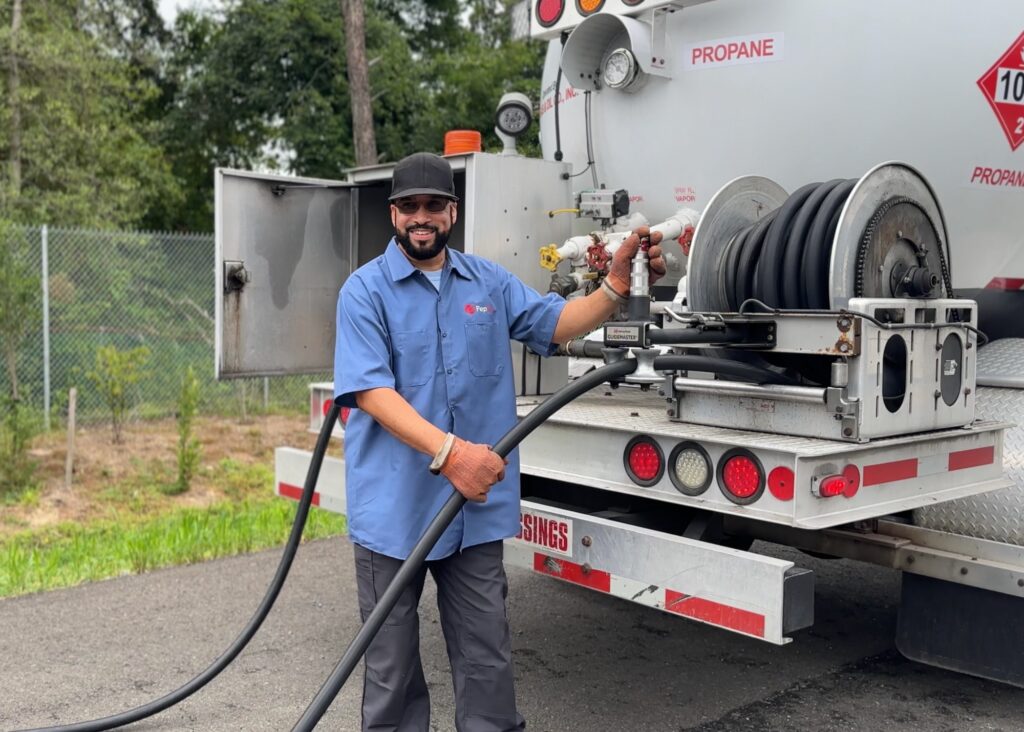
Meet Contributor and PepUp Delivery Driver, Randy Pendleton
Long-time Annapolis Propane customers in the Glen Burnie District have told us how happy they are to see their favorite driver of nearly a decade continue delivering their home propane with PepUp. Randy knows his customers by name, and he’s always willing to answer questions if you have them. Give him a wave if you see him delivering propane near you!