Outdoor propane uses and options on Delmarva: A guide for homeowners
Outdoor propane gets a workout on Delmarva, no matter the season.
Spring and summer are the time to fire up the grill, the pool heaters, and outdoor kitchens. Even into fall, patio heaters and fire pits help extend porch time.
Across Delaware, Maryland, and Virginia, propane is one of the most flexible fuels you can use outside. About 12 million U.S. households rely on propane for heating, cooking, and outdoor uses, according to the Propane Education & Research Council.
This guide walks through eight common outdoor propane uses, tank sizing and safety considerations behind each one, and your options when it comes to portable and permanent propane tank connections and refills.
Why propane works so well outdoors
Propane has a few properties that make it a natural fit for outdoor equipment. It stores cleanly in a steel cylinder, so you can keep a tank outside without worrying about it degrading. It burns hot, which means faster cook times on a grill and quicker warm-up on a pool heater. It puts out very low emissions for a combustion fuel, which matters for air quality and the environment.
Compared to electric outdoor appliances, propane gives you independence from unpredictable surges in electricity prices. A propane grill works when the power is out. A propane generator keeps the lights on. A propane patio heater warms a covered deck without an extension cord running across the yard. Propane also performs well no matter the temperature, which suits Delmarva’s often unpredictable coastal climate.
8 outdoor propane uses for Delmarva homes
1. Backyard grills
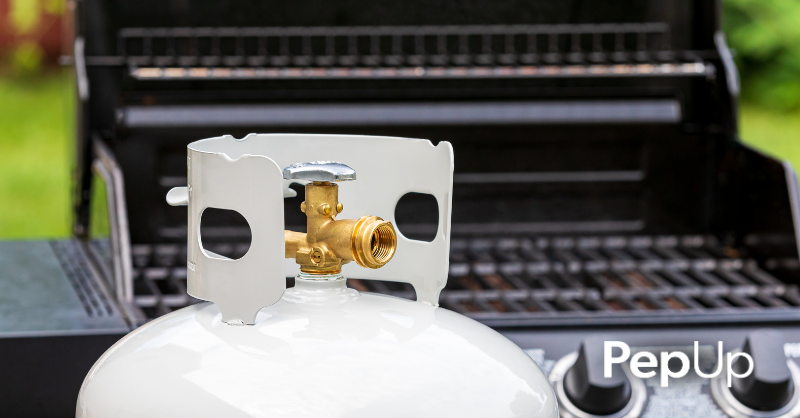
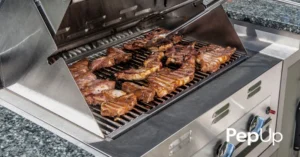 Propane grills are the most common outdoor use of propane on Delmarva and throughout the U.S.. Most home grills connect to a standard 20-pound cylinder, which gives roughly 18 to 20 hours of cook time on a mid-sized grill. Larger built-in grills, side burners, and pizza ovens are often permanently connected to a 100-pound cylinder or a larger underground tank, which makes it easy and convenient to use your outdoor propane appliances.
If you are upgrading your grilling setup to a permanent tank connection, our propane outdoor kitchen planning guide covers tank placement, line sizing, and code considerations.
2. Pool heaters
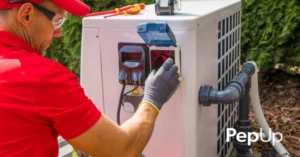 Propane pool heaters can extend the Delmarva swim season by six to eight weeks on either side of summer, compared to an unheated pool. Propane heats water faster than an electric heater and continues to work in cooler temperatures, which makes it a strong fit for spring start-up and fall closing. Most residential pool heaters connect to a 250 to 500 gallon tank, sized for both the pool heater and any other propane appliances in the home.
If you’re considering a propane pool heater, we’ve put together a list of 10 tips for choosing the most efficient pool heater for your needs.
3. Patio heaters and outdoor fire features
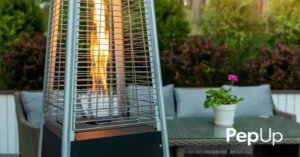 Patio heaters, fire pits, and fire tables stretch outdoor time well past sunset, especially when bay breezes start to cool off in September and October. Tabletop patio heaters typically run on small 1-pound cylinders. Tower-style heaters often use the same 20-pound tank as a grill. Built-in fire features usually tie into a dedicated outdoor propane line.
Here’s the PepUp team’s guide to patio heaters, if you’re looking for ways to extend your outdoor entertaining season.
4. Standby generators
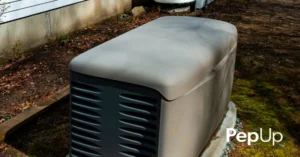 A propane standby generator is one of the most reliable ways to keep your home running through an outage. Propane does not degrade in storage the way gasoline does, so a generator tied to a home propane tank is ready whenever the next nor’easter or summer storm hits. Whole-home generators typically draw from a 500 to 1,000 gallon tank, depending on the size of the home and what’s using the generator’s power.
If you’re thinking of adding a whole-home backup generator and considering propane vs. gasoline-powered generators, use this comparison article to weigh the pros and cons of each.
5. Outdoor kitchens
 Outdoor kitchens have moved from luxury to mainstream across Delaware, Maryland, and Virginia. A typical setup includes a grill and side burner, sometimes a pizza oven, and often a smoker and fire pit. A dedicated propane line from a buried or above-ground home tank means you don’t have to worry about cylinder exchanges or refills, which is the single biggest convenience upgrade an outdoor kitchen offers.
The PERC 2026 Propane Construction Research Program now recognizes outdoor propane piping for grills and appliances as a qualifying appliance in its builder incentive program, which reflects how mainstream outdoor propane has become.
6. RV and camper uses
 Most RVs and campers use propane for refrigeration, cooking, and hot water. Travelers across Delmarva often top off cylinders before heading to Assateague, Trap Pond, or Janes Island. PepUp serves marinas, campgrounds, and RV resorts across the region with both large-volume propane delivery and our 20-pound cylinder exchange program for retailers.
7. Boats, docks, and bayside restaurants
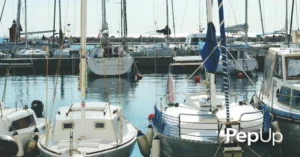 Boats with propane galleys and dockside eateries are common near the Chesapeake Bay and Atlantic Ocean’s beaches. Marina propane supply is essential for boaters and waterfront businesses.
PepUp partners with marinas and businesses across the region to keep their cylinder exchange cages stocked and their propane tanks full.
8. Farm and agriculture use
 Farm families across the Eastern Shore use propane for outdoor cooking, generators, pool heaters, and patio living right alongside the propane that fuels poultry house and barn heaters, and grain drying operations.
Many of our farm customers run a single account that covers both the farmhouse and the operation.
Sizing your tank for outdoor use
What propane tank size do I need? It’s one of the most common questions we hear. The right answer depends on what you are running, how often, and whether your outdoor propane setup connects to a larger home tank or to a portable cylinder.
Use this propane calculator to determine how much propane you might use in a month. That will help you narrow down your tank size options.
Portable cylinders (1 lb, 20 lb, 33 lb)
- 1-pound cylinders are the small green canisters used for tabletop heaters, single-burner camping stoves, and torches. They are designed for short, mobile use.
- 20-pound cylinders are the standard grill tank. A full tank holds about 4.7 gallons of propane (15 pounds net) and runs a mid-sized grill for 18 to 20 hours.
- 33-pound cylinders are commonly used for forklifts and some commercial outdoor equipment. They are a regular exchange product for retailers.
Stationary tanks (59, 124, 250, 500, 1,000 gallons)
For built-in grills, pool heaters, generators, and outdoor kitchens, a stationary home tank is almost always the better choice. Our propane tank size guide covers all tank sizing considerations, but as a quick reference:
- 59 gallons: ideal for homes with just a few propane appliances
- 124 gallons: small home, limited propane use
- 250 gallons: home heating and moderate propane use
- 500 gallons: home with multiple major appliances and high winter use for heating
- 1,000 gallons: whole-home propane plus standby generator, or homes (and farms) with very high demand, year-round
Outdoor propane safety basics: 5 steps to safe propane use
The National Fire Protection Association tracks an annual average of 11,421 home grill fires nationwide, with the majority traced to a small handful of preventable causes. The good news is that the same safety practices apply to grills, patio heaters, fire pits, and outdoor kitchens.
Where you place your tank matters, too. Our guide on the best place to put a propane tank covers above-ground and underground placement, setback distances, and code considerations for Delaware, Maryland, and Virginia.
Storage and weather considerations on Delmarva
Delmarva summers run hot and humid. Winters bring storms, coastal flooding, and the occasional ice or snow storm. Here’s how you can make sure your propane supply is always ready when you need it.
Heat
Propane tanks are designed to handle the heat of a Delmarva summer. The internal pressure rises with temperature, which is why tanks are filled to 80 percent capacity, not 100. If you can, keep cylinders out of direct sunlight, especially avoiding hot decks or asphalt driveways. This is especially true for portable tanks, because it’s easy to keep them in the shade.
Cold and storms
Propane does not freeze in normal Delmarva winter temperatures. Propane remains stable until about -44 degrees Fahrenheit, which (thankfully) is far colder than any of our winter temperatures. After a storm, check that snow or debris has not covered the tank regulator or shut-off valve.
Salt air
Homes near the coast see more rust and corrosion on outdoor equipment, including propane tanks and fittings, due to the high salt concentration in the air. Stationary home tanks installed by PepUp are designed to withstand coastal exposure. Portable cylinders should be inspected each season for rust, dents, or damage. If you see significant rust, it’s time to evaluate whether it’s time to retire your propane tank.
Small tank exchange or refill: which is better?
Both options work. The right answer depends on where you live, how often you grill, and how much you value convenience versus cost.
Tank exchange
Tank exchange is the swap-and-go option. You bring an empty 20-pound cylinder to a participating retailer, leave it in the cage, and walk out with a full one. PepUp supplies grill tank exchanges for convenience stores, hardware stores, garden centers, marinas, and campgrounds across Delaware, Maryland, and Virginia.
Tank refill
Refill is the top-it-off option. You bring your cylinder to a refill location, a trained attendant fills it by weight, and you take your same cylinder home. Refill typically gives you closer to a full 20 pounds for the same money.
PepUp customers can refill grill tanks and forklift tanks at our Federalsburg and Pocomoke district offices during business hours. Residents close to the Galena office can fill or exchange 20-pound grill tanks, while Belle Haven and Cambridge offices only offer grill tank exchanges. If you’re close to our Georgetown office, you can drop off a small propane tank for a refill and pick it up later.
Whatever district office and refill or exchange option you choose, please call the office first to make sure someone is available to fill or exchange your tank.
Which to choose
If you grill once or twice a week and want maximum convenience, exchange is the answer. If you grill often or run a high-use propane device like a patio heater, refilling your primary and standby tanks could be worth the extra step. Some Delmarva families do both: exchange during peak season, refill in the off-season.
Scheduling propane delivery on Delmarva
For stationary home tanks, delivery scheduling matters more than most homeowners realize. Demand for propane fluctuates with the seasons. November through February brings peak heating demand. May through August is the best time for planned refills, with the lowest demand and price per gallon.
A few practical guidelines we share with customers:
- Schedule a refill when (or before) your tank reaches 30 percent. That gives PepUp time to route the delivery without an emergency call. Also, when your tank is empty, your driver will need to pressure test the system to verify that it’s safe, and you’ll pay an extra charge for that service.
- Summer is the easiest season to book a delivery. Routes are flexible, and prices are the lowest they’ll be all year.
- Customers on PepUp Automatic Delivery don’t usually need to schedule at all, but may choose to request an early delivery if they know they’ll be using more propane than normal. Otherwise, we use their usage history or a wireless tank monitor to deliver before the tank gets too low.
- If you do run out and need an emergency refill, call us at (800) 638-7802. We answer 24/7, including holidays.
For pricing programs that smooth out propane costs across the year, our payment plans page covers the Promise Plan, Pre-Buy, and Price Cap options.
Call on PepUp with questions
Whether you are sizing a tank for a new outdoor kitchen, weighing exchange against refill, or just have questions, we are happy to help. PepUp has fueled homes and farms across Delaware, Maryland, and Virginia since 1963. We answer when you call, and we know this area as well as you do. Let’s talk!
Call us anytime at (800) 638-7802, or request a callback and your local energy specialist will follow up.
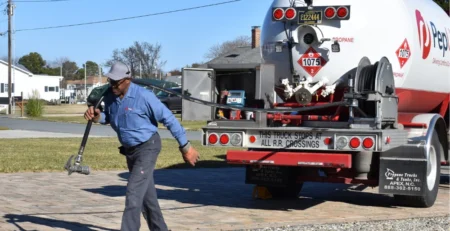
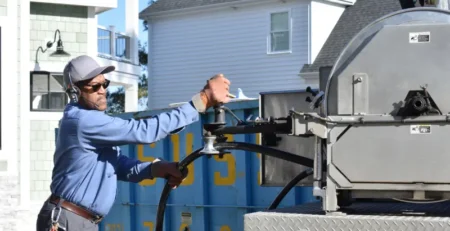
Say Hello to PepUp Delivery Driver, Bobby Callahan
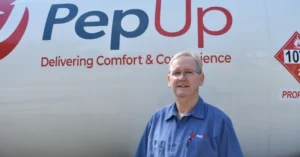 Bobby has been part of the PepUp team since 1982. Currently, he delivers propane in our West District. Bobby is a big fan of classic rock, including Pearl Jam, Fleetwood Mac, and Black Sabbath. If Bobby delivers your propane, just know that he loves his job, and has a rock’n roll soul.
Thank you for your years of exemplary service and excellent taste in music, Bobby!
Frequently Asked Questions (FAQs)
A 20-pound propane tank typically lasts 18 to 20 hours on a mid-sized grill at medium heat. The exact runtime depends on burner count, grill size, and how high you cook.
PepUp customers across Delaware, Maryland, and Virginia can exchange empty 20-pound cylinders at participating retailers, or refill or exchange them at most local PepUp District Offices during business hours. Call ahead to verify service availability.
An exchange leaves some residual propane in the tank, while a fill gets you every last drop. Exchange is faster and more widely available across Delaware, Maryland, and Virginia, while refill gives you more propane for your money.
PepUp supplies (truckload) grill tank exchanges to retail locations throughout Delmarva and offers refills and exchanges at several district offices. Call your local office to ask about options and availability.
Yes! Propane tanks are designed to be stored outside in summer and through every Delmarva season. Tanks should be kept upright, on a level surface, and out of direct contact with anything flammable. Propane cylinders should never be stored in a garage, shed, or vehicle.
PepUp residential tanks are installed to code in Delaware, Maryland, and Virginia and are inspected on every delivery.
Propane does not expire or degrade over time, even when stored for years. A propane tank that sits through the summer is just as ready to fuel your home or grill in October as it was in May.
PepUp recommends keeping residential propane tanks at or above 30 percent year-round to leave a comfortable buffer for the next delivery.
Summer is the easiest time of year to schedule propane delivery because demand is lower and routes are flexible. PepUp customers in Delaware, Maryland, and Virginia often book deliveries between June and August to avoid the fall rush and take advantage of Pre-Buy and Price Protection programs, when prices are at their lowest point of the year.
An outdoor kitchen with a grill, side burner, and pizza oven typically needs a 250 to 500 gallon stationary propane tank to avoid frequent cylinder swaps.
A PepUp Energy Specialist can recommend a tank size based on your appliances and expected usage. Use our interactive calculator, based on your appliance efficiency ratings and average hours of use in a month, to determine what size tank would be best to fuel your outdoor kitchen.
A propane pool heater can extend the Delmarva swim season by six to eight weeks compared to an unheated pool. Propane heats water faster than an electric heat pump and continues to work in cooler air temperatures, which warms your pool to a comfortable temperature in both early spring and fall.