A complete guide to residential propane tank sizes
Residential propane tanks typically range in size from 59 to 1,000 gallons, with most homes using a 59-, 124-, 250-, or 500-gallon tank depending on heating needs, appliance usage, and seasonal demand. Choosing the right tank size should be based on your highest-use months so you have enough heating fuel for winter, when propane consumption increases and delivery schedules can be impacted by weather and demand.
This guide breaks down common residential propane tank sizes, how they’re used, and how to choose the best option for your home so you can stay comfortable and avoid running low during colder months.
Factors to Consider When Choosing the Right Propane Tank Size
When selecting a propane tank, it’s important to think beyond your home’s basic square footage. Consider how your household uses propane throughout the year, especially during winter.
Home Heating Needs
If propane is your primary heat source, tank size plays a major role in maintaining consistent indoor temperatures. Larger homes, homes with older insulation, or properties in the Mid-Atlantic that experience prolonged cold spells often benefit from greater storage capacity to support heating demands throughout the winter.
If you need a better understanding of how much propane you’ll need to keep your home heating appliances running, use our Propane Needs Calculator to estimate monthly usage.
Appliance Usage
Every propane-powered appliance draws from the same tank. Water heaters, stoves, dryers, fireplace inserts, pool heaters, and backup generators all contribute to overall usage. Homes with multiple high-demand appliances like these typically require a larger tank to maintain steady performance and reduce refill frequency.
Seasonal Energy Demand & Future Needs
Household size, entertaining habits, and planning additions such as a home backup generator or outdoor kitchen, can significantly affect propane usage. Choosing a tank that accommodates both current and anticipated needs can help reduce the stress of frequent refills and the chances of running out of propane.
Planning for Winter Conditions
Cold weather increases propane consumption as heating systems run longer and more often. Many people also use their propane fireplaces more frequently as a supplemental heat source, which can have a major impact on how long a full propane tank will last.
A tank sized only for average conditions may need refilling faster than expected during cold snaps or winter storms.** Many homeowners opt for a larger tank or automatic delivery to help avoid winter run-outs (and emergency delivery calls) and maintain consistent service.
Even running low on propane during a winter storm can impact the function and efficiency of your LPG appliances. Although your home propane tank may not freeze, cold temperatures can lower tank pressure, which can impact your home’s appliances just as much as running out of propane completely.
Common Residential Propane Tank Sizes and Their Applications
Use our propane needs calculator to determine approximately how many gallons of propane your household will use each month. Then, use this comparison chart and detailed propane tank size breakdown by application to determine which tank size you’ll need.
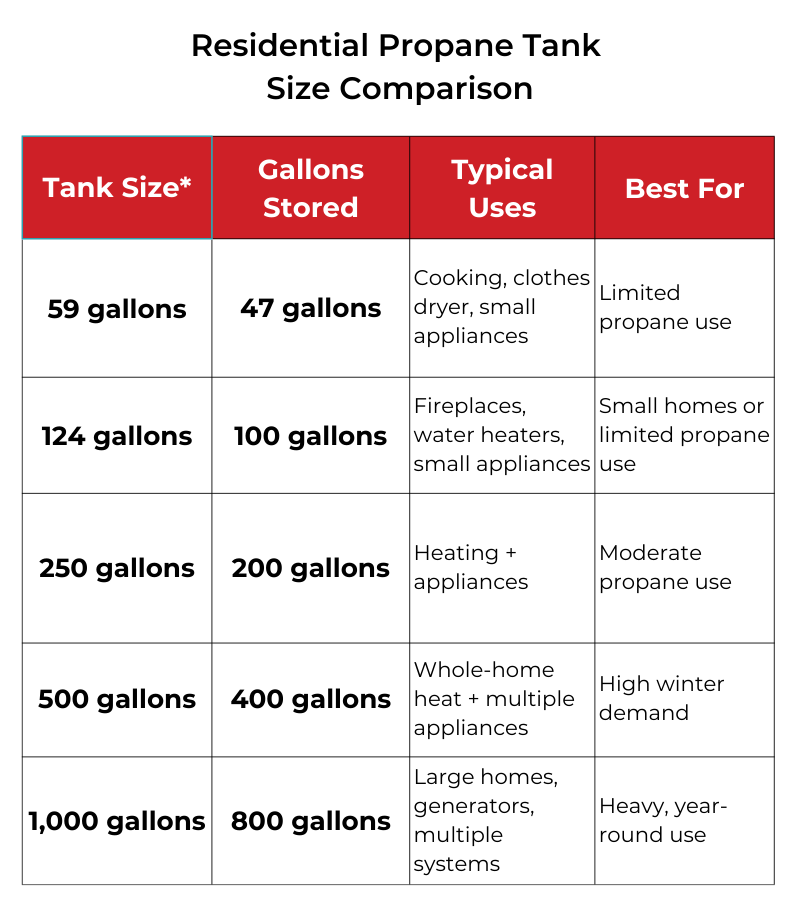
*Propane tanks are not filled to 100% capacity; usable propane is typically about 80% of the tank size.
**Refill frequency depends on weather, appliance usage, and delivery scheduling.
59-Gallon Propane Tank
A smaller tank size that’s popular among PepUp customers is the 59-gallon propane tank. It safely holds 47 gallons of fuel, and is normally used for cooking, possibly a propane clothes dryer, and small appliances. This propane tank size does not require a “setback,” or a minimum distance from the home, required for safety.
124-Gallon Propane Tank
A 124-gallon propane tank safely holds 100 gallons of propane, and is well-suited for smaller applications such as water heaters, fireplaces, cooking appliances, or supplemental heat. This is one of the most common tank sizes on Delmarva, particularly for homes with limited propane usage, and for pole barns that need supplemental winter heating.
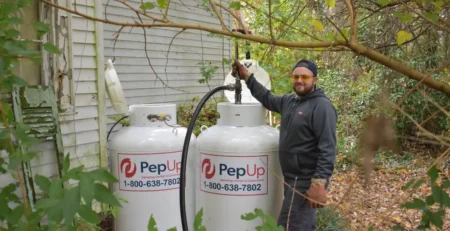
Many homeowners choose to install two 124-gallon tanks instead of one larger tank to gain flexibility in placement, especially on smaller lots. Tanks larger than 124 gallons must meet stricter setback requirements from buildings and property lines, which can be challenging on some coastal properties.
A two-tank setup can be connected using a dual-tank regulator system that automatically switches between tanks, helping maintain continuous propane supply during higher-use periods. This setup can also provide seasonal backup capacity, reducing the risk of unexpected run-outs and emergency refill requests.
250-Gallon Propane Tank
A 250-gallon propane tank safely holds 200 gallons of propane, and is a popular choice for medium-sized homes that use propane for primary heating, hot water, cooking, and small appliances. This size offers a balance between storage capacity and installation flexibility, while supporting reliable winter heating with fewer refills than smaller tanks.
Propane tanks that hold more than 100 gallons of propane must be installed at least 10 feet from buildings, appliances (including generators), and property lines. Read more about how much room you’ll need on your property for safe placement of tanks that hold more than 100 gallons of propane.
500-Gallon Propane Tank
A 500-gallon propane tank can safely hold 400 gallons of propane, and is ideal for homes that rely on propane as a primary heat source or operate several high-use propane appliances simultaneously. With greater storage capacity, this tank helps reduce refill frequency and supports consistent comfort during colder months when demand is highest.
1,000-Gallon Propane Tank
A 1,000-gallon propane tank can be safely filled with 800 gallons of propane. A tank this size is best suited for very large homes or properties with extensive propane use, such as multiple heating systems, backup generators, or multiple buildings. These tanks require more space and must meet larger setback requirements, but they provide long intervals between deliveries and dependable supply during peak usage periods.
While often associated with agricultural or commercial operations, 1,000-gallon tanks may also be used in residential settings with unusually high propane demand. Many property owners who need large-capacity tanks opt for underground tank placements, which helps with setback requirements and footprint.
Winter Propane Planning & Run-Out Prevention
Cold weather increases propane usage as heating systems run longer and appliances work harder. Smaller tanks can empty quickly during extended cold periods, particularly when multiple appliances are in use.
To reduce the risk of winter run-outs:
- Schedule refills before your tank reaches 30%
- Monitor propane levels more frequently during cold snaps
- Consider automatic delivery, and let PepUp manage your tank levels
- Choose a tank size that supports peak demand, not just average use
Planning ahead helps ensure reliable heat and fewer delivery concerns during the busiest time of year. Explore your propane delivery options now to plan ahead for high-demand winter months.
Propane Tank Safety Checks for All Tank Sizes
Routine propane tank inspections include visual checks for leaks, corrosion, and physical damage. PepUp inspects tanks at every fill and at least annually to verify regulator function, valve integrity, and overall tank condition. These checks help ensure safe, efficient operation and long-term reliability for homeowners.
Call the Experts to Help You Choose the Right LPG Tank Size
Choosing the right propane tank size doesn’t have to be complicated. PepUp Energy Specialists can help evaluate your home, appliances, and seasonal usage to calculate your monthly propane needs and recommend a tank size that works for you. If you’re unsure whether your current setup is adequate for your family’s winter use, our team is happy to review your options and help you plan for an upgrade.
Frequently Asked Questions About Propane Tank Sizes
Most residential homes use a 59-, 124-, 250-, or 500-gallon propane tank, depending on heating needs and appliance usage. Use our Propane Needs Calculator to determine your approximate monthly propane needs.
Homes that rely on propane for heat often benefit from the installation of two, 125-gallon tanks, or an upgrade to a 250- or 500-gallon tank to reduce refill frequency during cold weather.
That depends on your tank size, weather conditions, and appliance usage. Cold temperatures increase demand, so winter usage is typically higher than in warmer months. Use our Propane Needs Calculator to determine your approximate monthly propane needs.
Most providers recommend scheduling a refill when your tank reaches about 20-30% capacity. Scheduling refills in high-demand winter months should be done before your tank is critically low. We recommend that Will Call customers schedule propane deliveries when their tank levels are getting close to 30% capacity, rather than waiting until they reach 20%.
Yes. Larger tanks provide more usable propane and help stabilize supply during peak winter demand.
Yes. Multiple smaller tanks can offer placement flexibility and backup capacity, depending on property layout and local safety requirements.
Cold weather increases propane usage, can lead to a loss of tank pressure that impacts fuel delivery to essential appliances, and can impact propane delivery timing during storms, making advance planning especially important in winter.
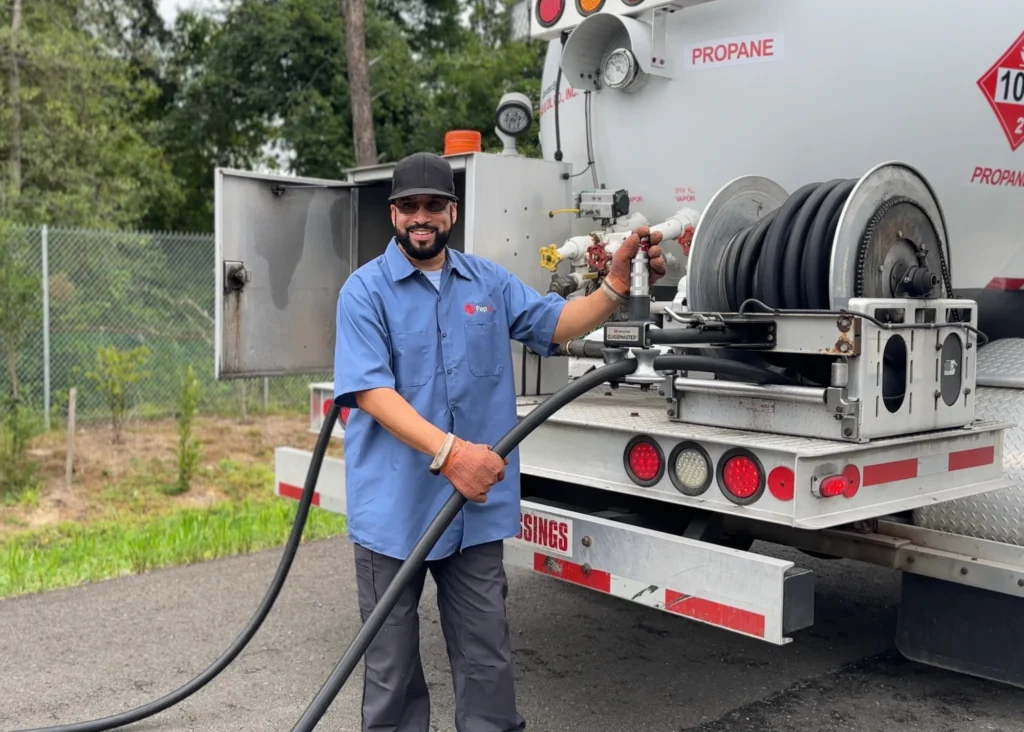
Meet Contributor and PepUp Delivery Driver, Randy Pendleton
Long-time Annapolis Propane customers in the Glen Burnie District have told us how happy they are to see their favorite driver of nearly a decade continue delivering their home propane with PepUp. Randy knows his customers by name, and he’s always willing to answer questions if you have them. Give him a wave if you see him delivering propane near you!